


Ironman training & family basics
By Ambassador, Nick Rose
Many people ask me how I do Ironman training with a family. My close friends believe I have the most supportive wife on the planet, and whilst this may be true and it certainly helps, it’s down to our partnership that has to be closely worked on. Adding children magnifies the challenges and having more than one child is definitely more than double the trouble.
So how does this work in our house?
Like most of the age groupers I race against, holding down a full-time job is what enables me to afford to compete and takes up most of my week. I also love my family to bits and have two gorgeous girls aged 3 & 7 and the most supportive wife.
So how does all of this fit into one week? It’s certainly not by accident.

Back at the Start
When we met 16 years ago, I already competed at ironman. I was also a competitive golfer, doing both set the scene prior to our relationship but we were younger, no kids, my now wife worked most weekends so fitting it all in was pretty easy, on the other hand we still made a lot of time for each other.
Over the next 9 years we visited some amazing places racing Ironmans. We also spent most of our spare money going on non-sporting holidays, it was an easy balance. I had given up golf in 2006 but this just meant more time on my bike at the weekend training.
In 2008 we found out we were expecting our first child the following April. Training volume reduced in preparation, ironman hours became half ironman hours, but through a sponsor I found myself on the start line of Ironman UK. With a solid day and a bit of luck on roll down I qualified for the world championships in Hawaii in the October.
The decision to travel to the other side of the world with a 6-month-old that year and see how it went has pretty much defined our approach to our current family dynamic. It really is possible to do both. Below are a few tips that have helped along the way.
Communication
There are a number of calendars in our house, but only one counts. The one in the kitchen that my wife spends hours in the first week of January updating with everyone’s birthdays and any occasions we already have plans for. If the long weekend training or races aren’t on here, they aren’t happening.
It sounds easy but communicating and taking the time to discuss the week ahead in terms of what you have to achieve doesn’t have to be a battleground leading to a session with ACAS – it’s just the start of the conversation.
Over the years we have worked out a balance of ‘give and take’. I have to admit, I am reminded occasionally that I have overstepped the mark. It’s not long before I am on the straight and narrow though. In all cases, I agree to reign it back.
In all of this, family comes first. If you end up missing a session because of a kids party, family occasion or just giving time back, it won’t really impact your race performance if you are consistent with your training.
Race season planning
The key to everything is agreeing up front what you are getting into. Obviously this includes what you are getting your family into. What race or races do I want to do in the next 12 months and then having that support is really important. Having the agreement of the one person that not only assists in bankrolling my passion, but is the one left holding the kids when I’m off training for 3-6 hours at a time is fundamental to this working.
Reduce the hours
If you work with a coach, they should be aware of your family commitments. They should structure your week around a number of key sessions on the times you definitely have free. All else can and sometimes does get dropped if the need arises.
Taking out the padding in your training plan can also reduce the hours you are on the road. There are countless AG high performers who do no more than 10-12 hours a week training. You really don’t need to be doing 20 hours a week.
Pick your time to train
I have friends who do their ironman training early. I personally train late on my own “rosey’clock”. It’s not unusual for me to be on the turbo or running at 11pm. This is just how it works for our family. I want to be there in the week to read the bedtime stories, we like to eat together and missing this just doesn’t work for me. I then change to early mornings nearer to race week to move more towards the race day schedule.
Make the sport inclusive for all
Whenever I race, I take the whole family if it’s suitable. Be careful of not making that a selfish act just to make yourself feel better that they are involved. An all-day ironman isn’t the place for two young children and if your partner wants to really support you then finding an alternative for childcare may be the better route.
Some events have the kids races as part of the schedule in race week. My daughters have both taken part in this these events. As you can see below, when the younger one did her first race, she loved every minute.

A few other tips for ironman training:
- If you have really small children, use a running pram. This gets them involved (unless they are asleep – then it’s a win-win) and gives your partner that break.
- If you can plan a longer ride around a point to point location that you are going to with the family, make an early start and meet them there.
- If you have older children, encourage them to bike while you do your longer runs. This prevents you having to do loops around the house for nutrition as they can carry water and its gets them out in the fresh air.
The result
It really can work. My recent results have shown that with hard work, an understanding partner and two young children, ironman training doesn’t need to be such a challenging affair. Yes, it’s definitely an ever changing training schedule and some days you may need to just go with the flow.
I would rather stop the training if I ever had to make the decision one way or the other. If you use some of the tips above, you shouldn’t need to make that choice.
Why should I consider cycle insurance for Triathlons?
Entering and training for triathlons cost significant amounts of money, as do the bikes we use to race; in any triathlon event, the risk of accidents, theft or damage to bikes is higher.
If I was unfortunate to not make it to the start line due to injury or postponement, having some of the entry fee covered softens the blow.
Having the peace of mind that my bike is covered if I was to crash or have it stolen from a transition area takes one less worry away, allowing me to focus on the race itself. That’s in addition to knowing my bike is covered on turbo, out training, and just heading to the coffee stop!
Nick Rose

Bikmo: Exclusive savings for Triathlon Ireland members
Many home insurance policies don’t cover bikes away from home, and there’s often a low maximum limit on your policy (check yours!)
That’s why at Bikmo, we designed simple, comprehensive policies specifically for triathletes, commuters, and all kinds of cyclists in mind.
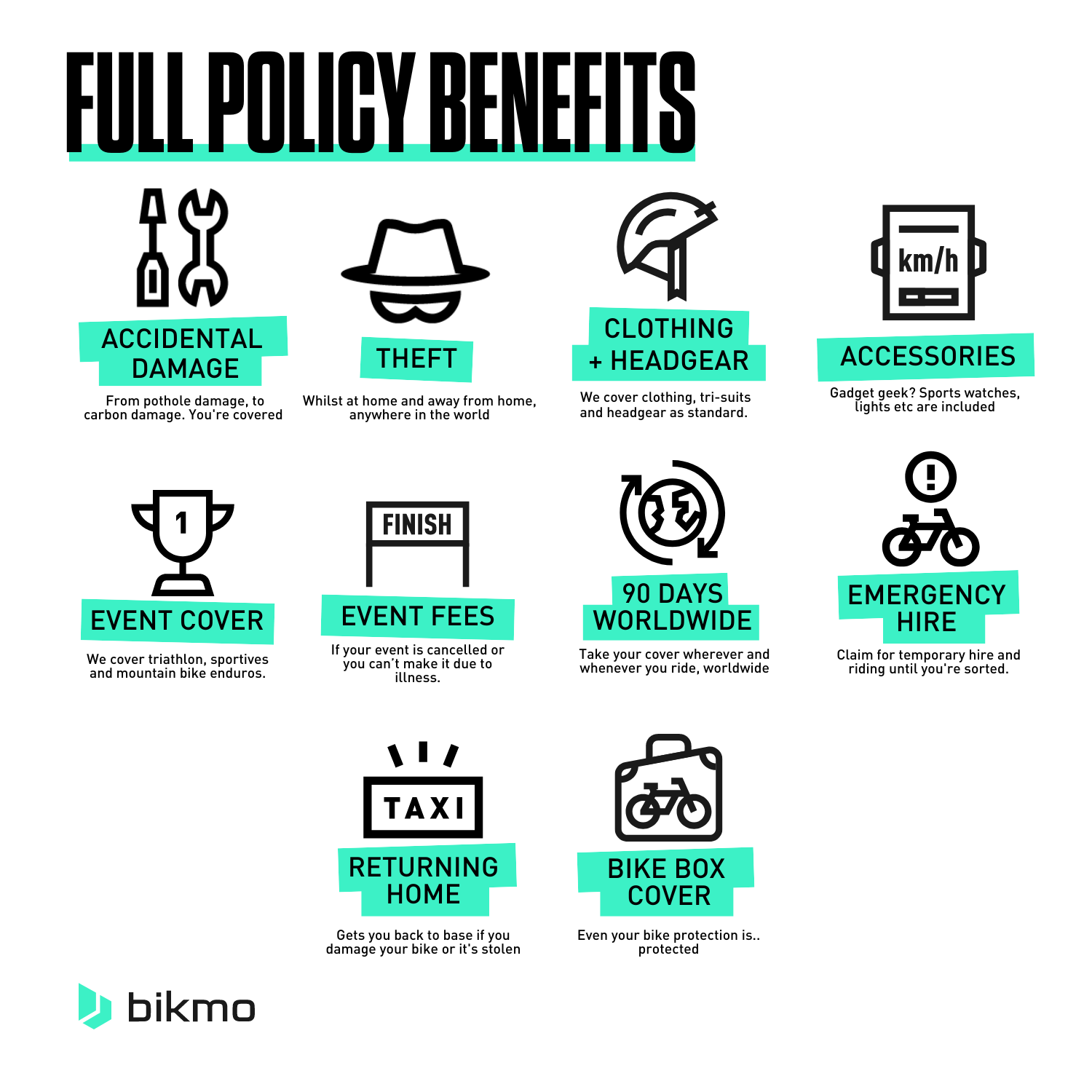
From accidental damage from a pesky pothole while commuting, to tri-suit clothing and headgear cover as standard, we’ve got your back. Plus, Triathlon Ireland members benefit from an exclusive 7.5%* saving on Bikmo bicycle insurance.
Other helpful blogs from Bikmo:
– Home insurance vs Cycle insurance guide
– Top 3 tips for locking your bike
– Open Project 2022 – Bikmo’s claim data
*Minimum premium €5/mo and policy wording applies. This promotion is provided by Bikmo GmbH is authorised/licensed by the Industrie- und Handelskammer München in Germany and is regulated by the Central Bank of Ireland for conduct of business rules.


